Saturday, 24 March 2012

World First cars.

For every car company there was the first car that came out of the production line, the one that started it all. Some of them are forgotten, others celebrated, but each one shaped the company that produced it. The following are a few collected, an idea by "The Car Lounge and ClownCar".

Ford Model A
Year: 1903
Before the Model T and highly efficient assembly line production methods turned the Ford Motor Company into 
a major player, there was this: the Model A. The company was started with just $28,000 of initial investment. 


Chevrolet Series C Classic Six
Year: 1911
This car pre-dates Chevrolet's purchase of a controlling interest in General Motors. In fact, the Chevy Classic Six 
was produced even before Chevy was formally incorporated. In 1912, the car's base price was $2,150.

Buick Model B
Year: 1904. 
No American automaker has been around longer than Buick. It was founded in 1899, and became a 
corporation on May 19, 1903 under the Buick Motor Company name. Its founder, David Dunbar Buick, 
was born is Scotland but set up shop in Detroit. The Model B was the first model offered for sale to the public.

Chrysler 70
Year: 1924
Walter Chrysler turned around the Maxwell Motor Company are re-organized it under his name. Before the 70, 
there was the Chrysler Six, but that was built under the Maxwell marque.

Jaguar Mark V and XK120
Year: 1948/9
Originally called the Swallow Sidecar Company, the name was changed to Jaguar Cars Limited after 
World War Two. The Mark V and the XK120 were the first new cars built under this name. 

Lotus Mark VI
Year: 1952
It says a lot about a company that its first production car was a racing machine. Customers were responsible 
for installing an engine and gearbox. 

Land Rover Series I
Year: 1948
Inspired by the Jeep, the original Land Rover was designed as a farm utility vehicle, somewhere between a
 tractor and a truck.

Ferrari 125 S
Year: 1947
Enzo Ferrari only approved production of the company's first road car to fund the racing team. Only two were built,
 both with amazing 1.5-litre V12 engines.

Lamborghini Tractor
Year: Post-war
This legendary Italian supercar maker started out by producing tractors before getting into high-performance 
sports cars and GTs.

Pagani Zonda C12
Year: 1999
Despite being such a young company, Pagani has already established itself as a competitor to the likes of 
Ferrari and Lamborghini.

Porsche 356
Year: 1948
Because of the scarcity of parts and materials in post-war Germany, Porsche used many VW Beetle parts to
 build the 356. However, the car quickly evolved.

BMW 3/20
Year: 1932
Despite having been around since 1916, this was the first vehicle designed and built in-house by the company. 

Mercedes-Benz SSK
Year:  1928
It would take pages and pages to explain the origins of Mercedes-Benz. Many companies and personalities were involved. The Mercedes-Benz brand didn't appear until 1926, and the SSK was one of the first new cars it produced.

Audi Type A 10/22
Year: 1910
Like Mercedes-Benz, the history of Audi is quite complicated. The company was founded in the early 1900s 
by August Horch, although he was soon forced out.

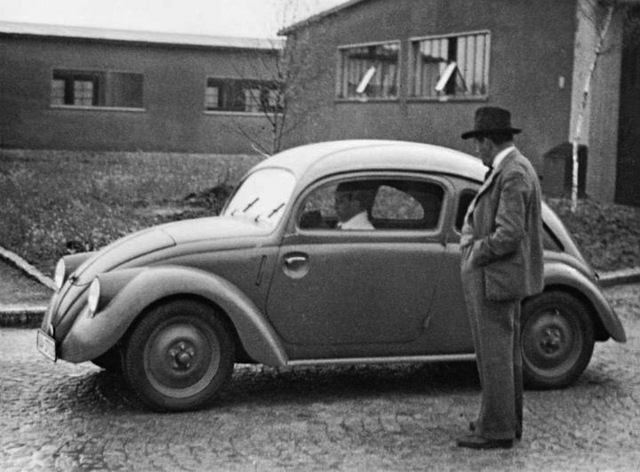
Volkswagen KdF-Wagen
Year: 1936
Originally founded by a Nazi labour organization, the company's purpose was to build more affordable 
cars for working-class people. Although, the war effectively stopped production before it could really begin. 
Last year VW Group sold over eight-million vehicles. 

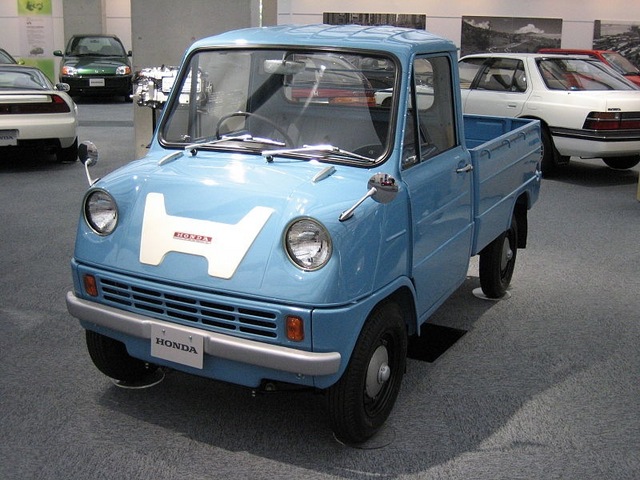
Honda T360
Year: 1963
At this time Honda was already a major manufacturer of scooters and motorcycles. The T360 was a small 
pickup with a top speed of just 100 km/h. 

Nissan / Datsun Phaeton
Year: 1934
Nissan comes from a long and complicated history of companies and conglomerates, but the auto business 
was separated off in 1934.

Hyundai Cortina
Year: 1967
Before the all-original Pony came along and really put the company on the map, Hyundai manufactured and 
sold the Ford Cortina.

Toyota AA
Year: 1934
Primarily and heavy industrial company, this was Toyota's first family car. At the time, the AA was priced 
at 3,350 Japanese yen. 

Bugatti Type 13
Year: 1910
The recent Veyron supercar was a return to form for Bugatti after all but disappearing in the '60s. Now the 
company is owned by VW. This tiny machine is the one that started it all.


Thursday, 22 March 2012

Strange and amazing.

Enjoy amazing but strange photos of people and things in recent days.(credit Reuters)

A worker test drives a car in the shape of a heels on a road in the southern Indian city of Hyderabad March 7, 2012. The shoe is part of a ladies series of creations by Indian car designer Sudhakar Yadav to mark the International Women's Day and the car can run at a maximum speed of 45 kph (28 mph).  


Milk containers hang from the windows of a passenger train in Ghaziabad on the outskirts of New Delhi March 14, 2012.  

A Guinness World Record for the longest train of a wedding dress is attempted in front of the Parliament palace in Bucharest March 20, 2012. The 2,750 meter long train broke a previous record of 2,488 meters. It is made of 4,700 meters of material using 1,857 needles, taking 100 days to made. 

A man performs with a crocodile at a zoo in Hanoi March 10, 2012.  

Clothes hang on a stick which is balanced on two human-shaped lanterns for the upcoming Wuhan-Chengdu International Panda Lantern Festival in Wuhan, Hubei province, China, March 13, 2012.   

A woman and her son sit inside the capsule of an electric tricycle as they drive along a main road in central Beijing March 15, 2012. 

Shadows are cast by people as they watch a busker playing an electric guitar as he stands in the river Thames at low tide on the Southbank in London March 15, 2012. 

An Yanshi (R), wearing a panda costume, stands in a truck as he unloads panda droppings which are used as fertiliser at his tea farm during a media event in Ya'an, Sichuan province March 17, 2012. China's national treasure, the giant panda, will become even more precious if one businessman succeeds in using their dung to grow organic green tea he intends to sell for over $200 a cup. An, an entrepreneur in southwest China, grows the tea using tonnes of excrement from panda bears living at nearby breeding centres.  

Zeng Lingjun uses a computer next to his son sleeping on a bed at his home inside an unused toilet of a hotel in Shenyang, Liaoning province March 18, 2012. Zeng, who is a shoe repairer, rented the unused toilet of the hotel since 2006 as his home, and made up his family by marrying Wang Zhixia in 2010, local media reported.  

Street musician James Bowen busks with cat Bob in Covent Garden in London March 13, 2012. Bowen has written a book named "A Street Cat Named Bob" about the experiences of the then homeless pair and how they met. 

An Israeli youth dressed in a headless costume watches the annual parade for the Jewish holiday of Purim in the Israeli city of Holon, near Tel Aviv March 8, 2012. Purim is a celebration of the Jews' salvation from genocide in ancient Persia, as recounted in the Book of Esther.  

A truck passes a dummy policeman in the town of Krugloe, some 200 km (125 miles) east of Minsk, March 13, 2012. Belarussian traffic police widely use double-sided cutouts of officers equipped with fake radar guns to try and curb speeding vehicles. 

Zoltan Kohari, known as the Slovak Batman, poses in his home in the town of Dunajska Streda, some 34 miles (55 km) south of Bratislava March 8, 2012. Kohari, who is 26 years old, lives alone in an abandoned building without water, heat or electricity. For local residents he became known as the hero in a Batman's costume. While he has not fought crime yet, he does believe in justice and wants to help the police. In the mean time, Kohari, who is poor, does what he can to help the residents to make their daily life easier. In return, some of these residents give him food.  

Retired Brazilian police officer Andre Luiz Pinheiro, 50, dressed as super-hero Batman, poses for a picture at home in Taubate city in Sao Paulo March 11, 2012. Pinheiro has been called to help police patrol the crime-ridden streets of Taubate, in Brazil. He was officially presented on March 17 in the districts with the highest crime rates in Sao Paulo state. Police captain Warley Takeo, one of the policemen who decided to bring in the character to help them fight drug traffickers, said the measure would bring long-term benefits. Takeo said making a connection between the police and Batman would help children have a clearer idea of good and bad. 

Money concealed in pastries that the German customs agency Zoll seized during an anti-money laundering operation, is displayed before the agency's annual statistics news conference at the finance ministry in Berlin March 16, 2012. 


Saturday, 17 March 2012

Jobs performed by dogs

Although most modern dogs are kept as pets, there are still a tremendous number of ways in which dogs can and do assist humans, and more uses are found for them every year. The following list provides an idea of the versatility of dogs:

Illustration from The Illustrated Natural History (Mammalia),
 published in 1853 showing the conformation of a Turnspit Dog.
 

Turnspit dogs were used as a source of power, they turned a treadmill connected to a roasting spit. Similar arrangements were used for household duties such as churning butter.

A Turnspit Dog at work in a kitchen. 

Service or assistance dogs help people with various disabilities in every day tasks. Some examples include mobility assistance dogs for the physically handicapped, guide dogs for the visually impaired, and hearing dogs for the hearing impaired.

A service dog wearing a colorful Service Dog ID vest
and a waterproof coat with reflective markings.
 

Therapy dogs visit people who are incapacitated or prevented in some way from having freedom of movement; these dogs provide cheer and entertainment for the elderly in retirement facilities, the ill and injured in hospitals, and so on. The very act of training dogs can also act as a therapy for human handlers, as in a prisoner rehabilitation project.

Golden Retrievers are often used as therapy dogs due to their
calm demeanor, gentle disposition, and friendliness to strangers
 

Rescue dogs assist people who are in difficult situations, such as in the water after a boat disaster. Search dogs locate people who are missing; lost in the wilderness, escaped from nursing homes, covered in snow avalanches, buried under collapsed buildings, etc.

Avalanche search SAR dog 

Herding dogs are still invaluable to sheep and cattle handlers (stock men) around the world for mustering; different breeds are used for the different jobs involved in stock work and for guarding the flocks and herds. Modern herding dogs help to control cattle and wild geese in parks or goats used for weed control. A well trained dog can adapt to control any sort of domestic and many wild animals

A Koolie working with sheep. 

Sled dogs, although today primarily used in sporting events, still can assist in transporting people and supplies in rugged, snowy terrain.

A ten-dog team of Seppala Siberian Sleddogs in tandem hitch on a
frozen Mud Lake, a small lake west of 
Lake Laberge and the Klondike Highway  
A typical sled dog breed, such as the Greenland Dog, has a very dense
 double coat, wide padded feet, erect ears, a curled tail, wedge-shaped head, and a muscular build.
 

Performing dogs such as Circus dogs and dog actors are trained to perform acts that are not intrinsically useful, but instead provide entertainment to their audience or enable human artistic performances.

Australian Shepherd. A trained dog competing in dog agility.

Hunting dogs assist hunters in finding, tracking, and retrieving game, or in routing vermin. Less frequently a dog, or rather or a pack of them, actually fights a predator, such as a bear or feral pig. There are several types of hunting dogs developed for various tasks. The major categories of hunting dogs include hounds, terriers, cur type dogs, and gun dogs. Among these categories further divisions can be made based upon the dogs' skill sets.

Poodle.  Water dogs are a subclass of retrievers.   

Guard dogs and watch dogs help to protect private or public property, either in living or used for patrols, as in the military and with security firms. Many of the now prominent guardian breeds such as Rottweilers started as farm dogs types but then developed over many years into guard breeds. Some breeds, such as the Weimaraner and Rhodesian Ridgeback, were originally bred for hunting, but their large intimidating look and territorial instincts have helped them evolve into guard dogs in today's society. Others like Dobermans were specifically bred as guard dogs.

Breeds like this Doberman were specifically bred for guard duty. 

Tracking dogs help find lost people and animals or track down possible criminals.

Like most scent hounds, the Basset Hound has long ears,
 large nasal passages, and a sturdy body for endurance.
 
Tenterfield Terrier in tracking trial. 

Detection dog or sniffer dog is a dog that is trained to and works at using its senses (almost always the sense of smell) to detect substances such as explosives, illegal drugs, or blood. Hunting dogs that search for game and search dogs that search for missing humans are generally not considered detection dogs. There is some overlap, as in the case of human remains detection dogs (sometimes called cadaver dogs), trained to detect human remains. They are also used for drug raids to find where the drugs are.

A Belgian Malinois of a police K9 unit. 

A detection dog at work 

Police dog is a dog that is trained specifically to assist police and other law-enforcement personnel in their work. Police dogs are often referred to as "K9s", which is a homophone of canine. One commonly used breed is the German Shepherd, although now Belgian Malinois are popular K9s to use.

Police dog during training exercise 

War Dogs or K9 Corps are used by armed forces in many of the same roles as civilian working dogs, but in a military context. In addition, specialized military tasks such as mine detection or wire laying have been assigned to dogs.

U.S. Army employing special hoist, and doggles, while landing
and retrieving dog and handler by helicopter
 

Dogs are sometimes used in programs to assist children in learning how to read. The Reading With Rover program in Washington pairs trained dogs with children who read aloud to the dog. This process builds confidence and reduces stress.

Working dogs make excellent pets as long as potential owners realize that these dogs must be given 'work' to do. Dogs that are not to be used for their original purpose must be trained from a young age and are best suited to active persons and families. Obedience training, dog sports, informal or novelty shows, and trial work are all excellent channels for these breeds' energy. At the very least they must have daily walks or other exercise at an appropriate level for the breed, given toys, played with, and provided with human company.

Working dogs that are chained, left alone, or ignored become bored, vocal, and even neurotic; they may exhibit malaise, lethargy, destructive behavior or attempt to escape. Working dogs inappropriately chosen as pets are often surrendered to shelters for these reasons.


Wednesday, 8 February 2012

10 World environmental risk countries.

In 1989, Douglas Adams an author, set out around the world to find animals most at risk. His book, ‘Last Chance to See’, tracked endangered animals and birds like the Aye Aye in Madagascar, China’s Yellow River Dolphin, and the Amazonian Manatee in Brazil. Twenty years later, climate change and rising sea levels is threatening not only animals, but also entire nations. Here are some nations most at risk:

Vietnam


Since emerging out of isolation in the 1980’s, Vietnam has become one of the world’s fastest growing economies. Unfortunately, according to the World Bank up to 16% of its area, 35% of its people and 35% of its gross domestic product could be wiped out if sea levels rise by 5 metres. Climate change has been detrimental to this Southeast Asian nation, with an increase in the severity of floods, drought and typhoons. Entire blocks of Ho Chi Minh City were underwater at the end of 2011, with vast portions of the country flooded.

Kiribati


Straddling the equator in the Pacific Ocean, the Republic of Kiribati is an island nation of 100,000 people, living on 32 atolls spread out over a staggering 3.5 million square kilometres. Its largest urban centre, Tarawa, sits at less than 3m above sea level, with an average width of just 450 metres. Besides rising sea levels, storm surges, drought, cyclones, and shoreline erosion have made it one of the most vulnerable countries to climate change. Fortunately, with the aid of the World Bank, the Global Environmental Facility and others, Kiribati’s government has instituted a series of ‘adaption measures’ it hopes will ensure its survival.

Tanzania


Deforestation, pollution, poaching, urban expansion, and now climate change are seriously threatening the future of 200 endangered animal species in Tanzania. These include the black rhino, hammerhead shark, wild dog and bush baby. Meanwhile, Tanzania’s Ministry of Environment reports that up to 80% of the glaciers atop Mount Kilimanjaro have vanished over the last 50 years, largely due to deforestation and warmer temperatures. This could threaten drinking and irrigation water supplies for millions in the surrounding area.

Barbados


Barbados, a popular winter getaway, is facing more intense hurricanes, coastal erosion, rising sea levels, and damaging coral bleaching. The government has been working for nearly 30 years to protect its threatened coastal zone, which thanks to tourism, also serves as the country’s best economic resource. It has spent millions of dollars helping to stabilize erosion along its 97km stretch of coastline, including building a waterfront promenade that doubles as a tourist attraction and coastal buffer for devastating windstorms.

Bangladesh


Floods, cyclones, and tornadoes devastate Bangladesh almost annually, and climate change is only making it worse. Although it’s coastline is relatively small, if sea levels rise just one metre, it will inundate up to 30% of the country, with a devastating impact on an estimated 40 million people. Its monsoon season has been getting increasingly warmer and its winters cooler, causing glacial melt in the Himalayas and increased flooding of inland areas. In 1998, the country saw the worst flooding in modern world history, displacing 30 million people and flooding two-thirds of the country.

Nepal


Rising temperatures have caused extensive glacier melting, and the result has been a serious increase in floods and landslides for Nepal. Rainfall has become more unpredictable, typically followed by periods of drought, all of which has impacted communities around the country. Some towns have responded by growing a species of flood tolerant rice, or elevating tube wells to prevent water contamination during flood seasons. Nepal is working with various environmental organizations to help the risk of glacier lake outburst floods, but remains constantly at threat.

Maldives


In 2009, the government of the Maldives drew worldwide attention to its environmental risk by holding a cabinet meeting underwater. 80% of the country’s 1200 islands in the Indian Ocean sit just one metre above sea level. Some scientists predict the ocean will literally swallow the Maldives, displacing the country’s 390,000 population. It took 14 years for the government to build a 3 metre high wall around the capital city of Male, protecting the population from tidal surges, but not from rising sea levels. The government has looked at land purchases in Sri Lanka, India and Australia for the relocation of what could be the world’s first environmental refugees.

Bhutan


This landlocked Asian kingdom is located at the eastern end of the Himalayas, making it particularly vulnerable to melting glaciers, and the formation of glacier lake outburst floods (GLOF). Also known as the ‘silent tsunami’, a GLOF threatens whatever lies downstream – people and agriculture. As temperatures continue to rise, the disappearance of Himalayan glaciers, the ‘water towers of the world’, spells the loss of fresh water reserves for millions of people.

Malawi


This poor, landlocked country in southern Africa does not have to worry about rising sea levels, but rather the onset of frequent and intense droughts. The World Bank has identified the country as being most at risk from droughts, with temperatures rising above the global average, impacting crops and agriculture. Disaster Risk Management faces a challenging mix of poor farmers, rapid deforestation and increasing soil erosion.

Tuvalu


This Pacific Island nation sits on a string of nine coral atolls with the highest point being just 4.5 metres above sea level. It has already reported losing one metre of land around the circumference of its largest atoll. The country hopes to shift 100% to renewable energy by 2020, hoping to inspire other nations to do the same. Meanwhile, increased salinity in the water has caused problems for what little agriculture the nation has. The population of 12,000, living on just 26 square kilometres of land, has also toyed with the idea of resettlement abroad.


back to top //PART 2